
Contact Us
info@revolutionevasia.comJoin our Mailing list
 Chat With Us
By Shereen Naman • Thu Nov 06 2025
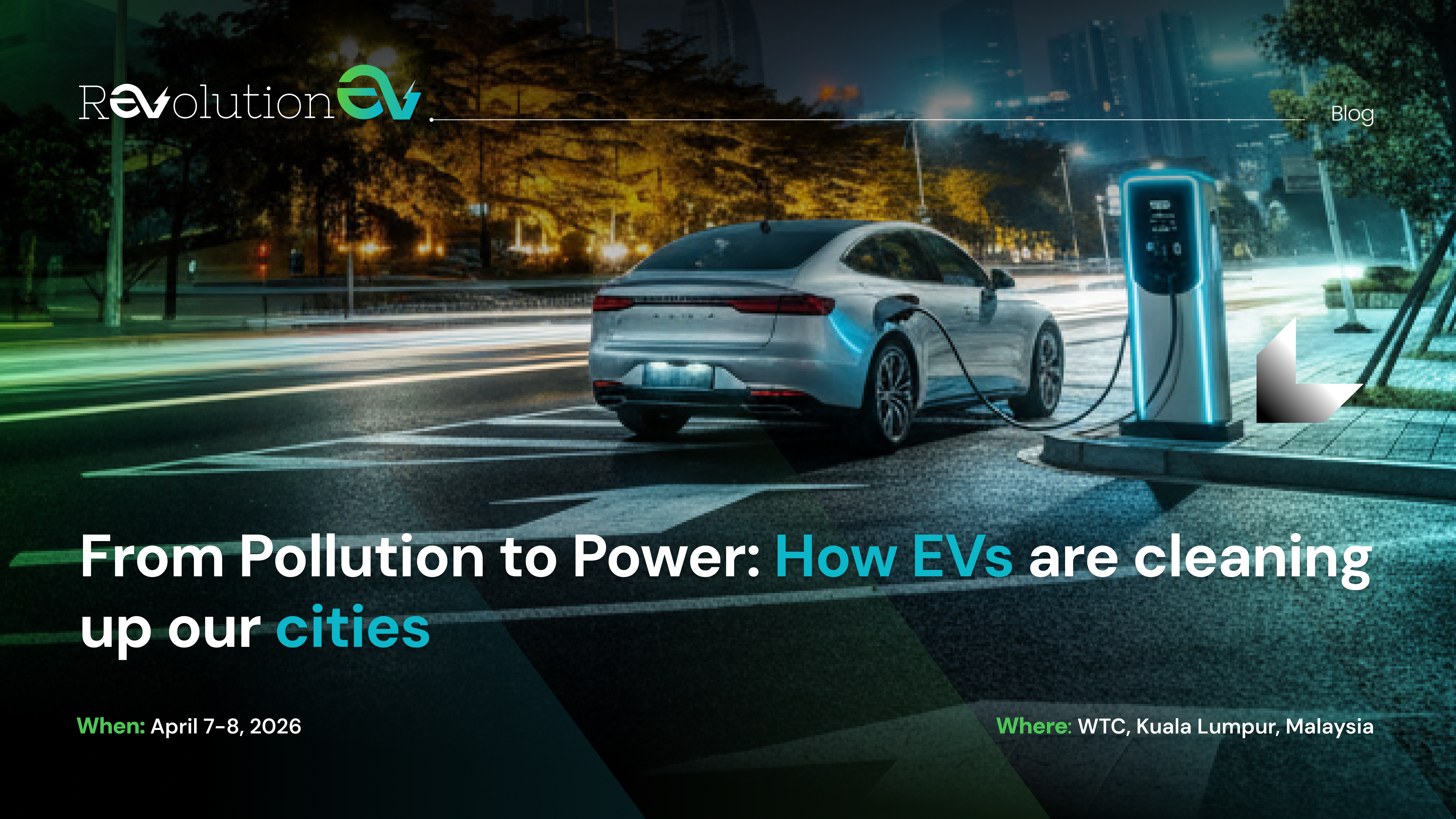
For decades, our cities have been symbols of growth and innovation, but behind the progress has been a rising tide of pollution. The smoke from millions of engines, the haze of exhaust fumes, and the constant hum of traffic have shaped urban life for generations. Yet, as the world stands at the crossroads of climate change and clean energy, a quiet revolution is transforming the way we move. Electric Vehicles are not just changing transportation. They’re turning pollution into power.
Every petrol or diesel vehicle on the road burns fossil fuels that release carbon dioxide, nitrogen oxides, and other harmful pollutants into the air. These emissions don’t just contribute to global warming; they directly affect our health, causing respiratory diseases and lowering air quality in cities worldwide. The more cars we drive, the thicker the smog that cloaks our skylines. It’s a cycle we’ve lived with for too long but it’s one that can now be broken.
Electric vehicles are the antidote to this pollution. They run silently and smoothly, powered by electricity rather than combustion. With zero tailpipe emissions, every kilometer driven in an EV is a kilometer free from carbon and toxins. In fact, a single EV replacing a fuel-based car can prevent over a ton of carbon emissions every year. And as national grids increasingly shift toward renewable sources like solar and wind, the energy used to charge these vehicles becomes cleaner too. The result is a ripple effect cleaner air, quieter streets, and healthier cities.
But the revolution doesn’t end there. The very batteries that power EVs are also being reimagined for a sustainable future. Once they’ve finished their service in vehicles, these batteries are repurposed for energy storage in homes and businesses. Instead of becoming waste, they store renewable energy, balancing grids and supporting communities. The materials within the lithium, nickel, cobalt can also be recovered and reused, reducing the need for new mining and lessening environmental strain. In this way, the EV movement is creating a circular economy where energy and resources never go to waste.
Beyond individual cars, this shift represents a new vision for how cities function. Imagine streets filled with electric buses, delivery vans, and ride-sharing fleets all powered by clean energy. Charging stations drawing power from solar rooftops. Apartments and offices running on energy stored in recycled EV batteries. This is more than a technological transition; it's a cultural transformation that connects mobility, sustainability, and community progress.
At its core, the move from pollution to power is about empowerment. It’s about giving people, businesses, and entire cities the tools to breathe cleaner air and live more sustainably. Each time someone plugs in their EV, they’re not just charging a battery they’re recharging the planet. They’re driving change, quite literally, toward a future where energy is clean, motion is silent, and power comes not from burning, but from believing in something better.
The journey has already begun. The hum of electric motors on our streets is the sound of renewal, the sound of progress. From pollution to power, we are witnessing one of humanity’s greatest transformations, and it’s only just getting started.
The shift to electric vehicles is not just about technology, it's about redefining our relationship with energy and the environment. Each innovation in battery efficiency, charging infrastructure, and renewable integration is a step toward long-term sustainability. Governments and industries across the world are investing heavily in this transformation, creating cleaner public transport systems, incentivizing EV ownership, and building networks of charging stations that make electric mobility accessible to everyone. This global collaboration is setting the stage for a future where clean energy drives not just our cars, but our economies and communities as well.
What makes this movement truly powerful is the mindset it inspires. The rise of EVs reflects a collective awakening, a realization that progress doesn’t have to come at the planet’s expense. It shows that innovation and responsibility can coexist. Every new electric vehicle on the road stands as proof that change is possible when people, technology, and purpose align. As we continue to move from pollution to power, we’re not just rewriting the story of transportation; we’re shaping a cleaner, brighter, and more sustainable chapter for humanity.