
Contact Us
info@revolutionevasia.comJoin our Mailing list
 Chat With Us
By Isha Qureshi • Thu Dec 18 2025
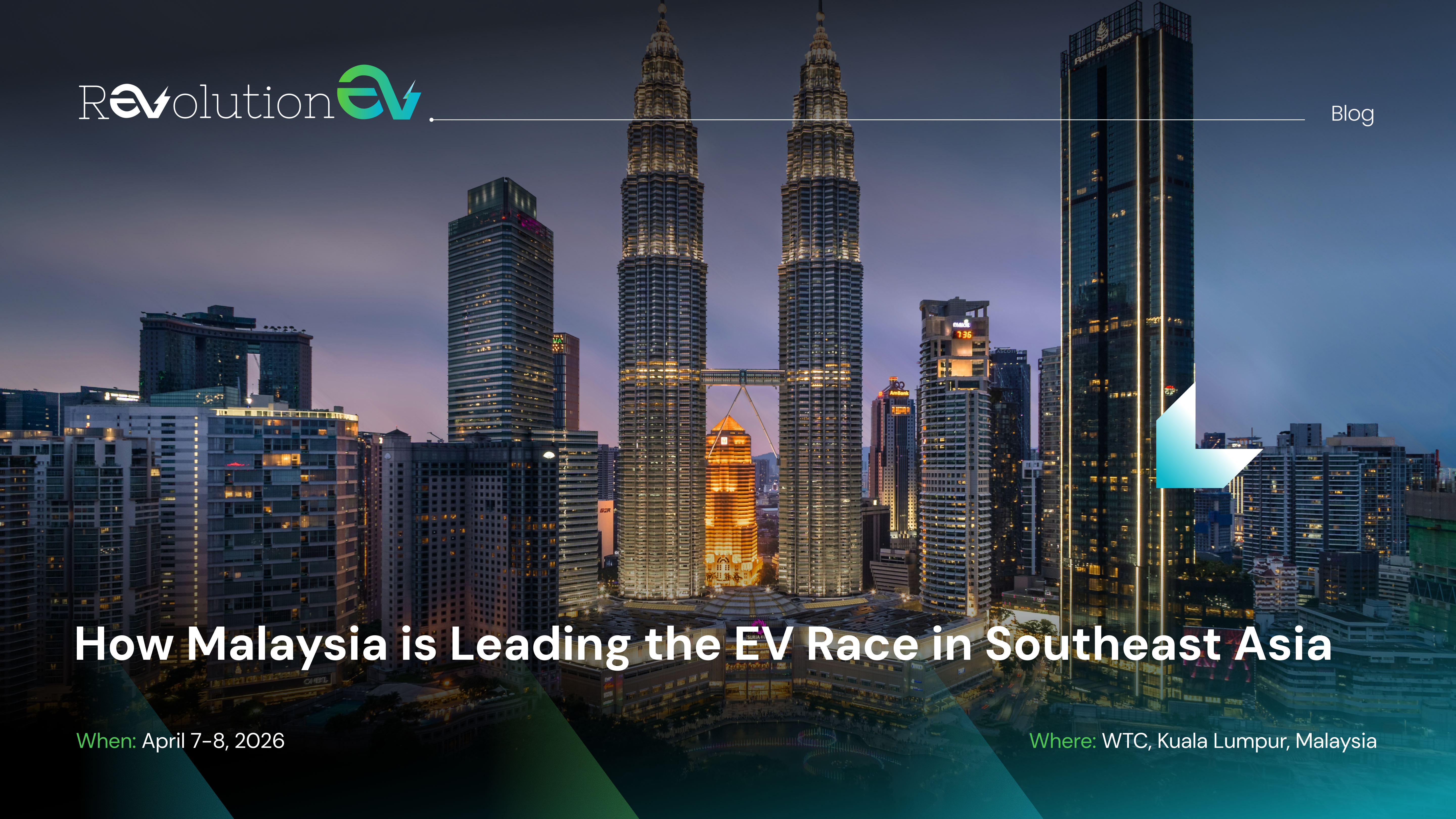
Malaysia is embarking on a transformative phase in its mobility sector, driven by the global transition toward electric vehicles. With comprehensive government support, accelerating infrastructure development, and robust industry engagement, the country is strategically positioning itself as a leading EV hub in Southeast Asia. This transition is not merely a technological evolution, it is a national economic and environmental imperative. Malaysia’s progress reflects a convergence of forward-looking policy, commercial readiness, and global alignment. At the core of Malaysia’s EV acceleration is a coordinated policy framework aimed at reducing carbon emissions and promoting sustainable transport. The Low Carbon Mobility Blueprint (2021–2030) and the National Energy Transition Roadmap (NETR) establish a clear direction for long-term mobility reform.
The government’s commitment is further underscored by its ambition to have 15% of new vehicle sales comprised of EVs by 2030, reinforcing its intent to integrate clean mobility into the national development agent. The national target to deploy 10,000 public charging points by 2025 is supported by collaborative efforts between government agencies, state utilities, and private operators. Key players including Gentari (a Petronas subsidiary), TNB Electron, Shell Recharge, and ChargEV are actively rolling out AC and DC fast charging stations across highways, business districts, residential areas, and commercial centers. This growing infrastructure network is designed for scalability and resilience, enabling seamless integration with smart mobility solutions and enhancing user confidence in EV adoption.
Market Growth
Malaysia’s EV market is showing strong growth momentum. Increasing environmental awareness, and a broader range of vehicle options are contributing to a shift in consumer preferences. Major automotive brands including Tesla, BMW, BYD, Mercedes-Benz, and Hyundai have launched dedicated EV models tailored for the Malaysian market. The increase in competitive offerings is improving affordability, accelerating adoption, and broadening the appeal of EVs across market segments. In parallel, fleet operators and logistics providers are integrating EVs into commercial operations to achieve cost efficiencies and meet corporate sustainability targets. The alignment between consumer and corporate adoption is indicative of a mature and expanding EV ecosystem.
Malaysia is advancing its position beyond that of an EV adopter to become a strategic contributor to the global EV value chain. Its strong foundation in electronics, automotive components, and precision engineering offers a competitive advantage for supply chain localization. International manufacturers such as Tesla, Geely, and Chery have announced or initiated investments in local assembly and production facilities. These developments are supported by government-backed investment incentives, industrial park infrastructure, and specialized workforce training programs. Domestic companies are also contributing to growth across segments such as battery pack assembly, charging systems, software development, and energy storage. This ecosystem expansion enhances economic diversification while supporting innovation-driven industrial development.
Sustainability Objectives
Malaysia’s EV roadmap is strategically aligned with national and global climate objectives. Electrification of the transport sector directly contributes to the country’s commitment to reduce greenhouse gas emissions and transition to net-zero carbon status by 2050. EV adoption reduces urban air pollution, improves energy security, and supports integration with renewable energy sources. As part of broader ESG goals, it also provides corporations with a platform to meet decarbonization commitments while enhancing operational efficiency. These sustainability outcomes position Malaysia as an attractive destination for ESG-conscious investors and multinational corporations seeking low-emission operating environments.
With its central location in ASEAN, advanced infrastructure, and stable regulatory environment, Malaysia is well-positioned to become a regional hub for EV manufacturing, innovation, and exports.The country’s connectivity to high-growth markets, coupled with favorable trade agreements and logistics capabilities, strengthens its role in regional value chains. Malaysia’s participation in the EV sector enhances its strategic relevance in the global energy and mobility transition.
Malaysia is advancing with clarity and confidence in the EV landscape. Government-led policy, infrastructure scalability, growing consumer demand, and industrial integration are combining to create a resilient and competitive EV ecosystem. The transition is not just about electric vehicles, it is a national strategy for clean growth, industrial modernization, and long-term sustainability. For stakeholders across sectors, Malaysia presents a compelling opportunity to engage, invest, and lead in the future of mobility.