
Contact Us
info@revolutionevasia.comJoin our Mailing list
 Chat With Us
By Isha Qureshi • Tue Jan 06 2026
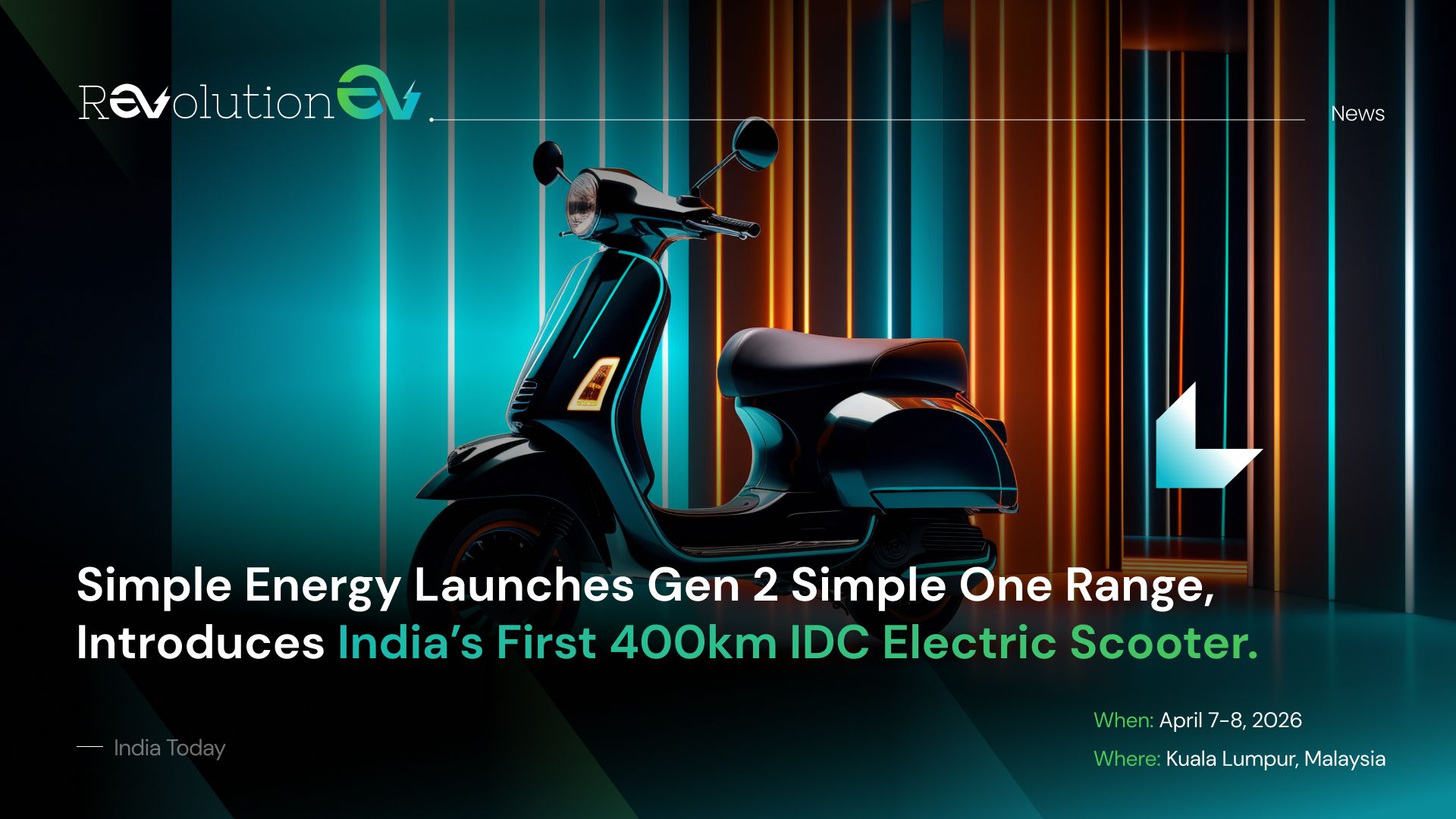
Bengaluru-based electric vehicle manufacturer Simple Energy has strengthened its electric scooter portfolio with the launch of the Gen 2 versions of the Simple One and Simple OneS, along with the unveiling of the all-new Simple Ultra. The latest addition is being positioned as India’s longest-range electric scooter, with a claimed IDC-certified range of 400km. With these launches, Simple Energy now offers four distinct scooter models aimed at catering to varied performance and range requirements while addressing range anxiety among Indian consumers.
The highlight of the announcement is the Simple Ultra, which becomes the first electric scooter in India to claim a 400km IDC range. The scooter is equipped with a 6.5kWh battery pack, currently the largest fitted to an electric scooter in the country. According to the company, the Simple Ultra delivers a top speed of 115kmph and accelerates from 0–40kmph in 2.77 seconds, placing it among the fastest electric scooters available in the market. While pricing has not yet been disclosed, the model will be available for pre-booking at Simple Energy dealerships, with deliveries scheduled for a later date.
Alongside the Ultra, Simple Energy has introduced the Gen 2 iteration of the Simple One, now offered with two battery options. The 4.5kWh variant delivers an IDC range of 236km and is priced at Rs 1,69,999. This version produces 8.7bhp (6.4kW) of peak power and 52Nm of torque, achieves a top speed of 90kmph, and accelerates from 0–40kmph in 3.3 seconds.
The larger 5kWh variant offers a higher IDC range of 265km and is priced from Rs 1,77,999. It develops 12bhp (8.8kW) of peak power and 72Nm of torque, reaches a top speed of 115kmph, and completes the 0–40kmph sprint in 2.55 seconds. Both variants feature six riding modes, a 35-litre underseat storage compartment, a 780mm seat height, CBS disc brakes on both wheels, and four-level regenerative braking.
The Simple OneS Gen 2 has also been updated, with its IDC range increased to 190km, up by 9km compared to the previous model. It is powered by a 3.7kWh battery and produces 8.8bhp (6.5kW) of peak power and 52Nm of torque, while achieving 0–40kmph acceleration in 3 seconds. The scooter now has a reduced kerb weight of 118kg and a claimed braking distance of 18.49 metres. The Simple OneS Gen 2 is priced at Rs 1,49,999.
Compared to the outgoing Gen 1.5 models, the Gen 2 range receives several design and functional enhancements. Updates include refreshed styling, a new 1-litre glove box, a dedicated charging port, and a redesigned dashboard. Advanced features such as traction control, cruise control, and four-level regenerative braking have also been added. The Simple One Gen 2 is now 8kg lighter, with its kerb weight reduced to 129kg, while a lower seat height has been introduced to improve rider comfort.
On the technology front, the Simple One Gen 2 is equipped with a 7-inch touchscreen dashboard, while the OneS Gen 2 features a non-touch display. Both scooters support 5G e-SIM with LTE connectivity, Bluetooth, smartphone app integration, OTA updates, navigation, TPMS, Find My Vehicle, and Park Assist with forward and reverse assist. The system runs on Android 12 and carries an IP65 rating for water and dust resistance.
In terms of ownership benefits, Simple Energy is offering a lifetime warranty on the motor and battery across its entire scooter range. This is complemented by a 3-year/30,000km vehicle warranty and a 3-year/20,000km charger warranty. All models support home charging through a portable 750W charger.
The Gen 2 Simple One and Simple OneS are available for immediate purchase across more than 61 Simple Energy showrooms in cities including Bengaluru, Pune, Hyderabad, Kochi, and Jaipur, and can also be purchased online via Amazon and Flipkart. As part of a limited-time introductory offer, prices for the Gen 2 lineup start at Rs 1,39,999.
Looking ahead, Simple Energy plans to significantly expand its retail and service network, targeting 150 dealerships and 200 service centres by March 2026. The company is also preparing for an IPO in FY27, with plans to raise approximately USD 350 million, while aiming to achieve EBITDA positivity before the end of FY26.