
Contact Us
info@revolutionevasia.comJoin our Mailing list
 Chat With Us
By Isha Qureshi • Fri Dec 26 2025
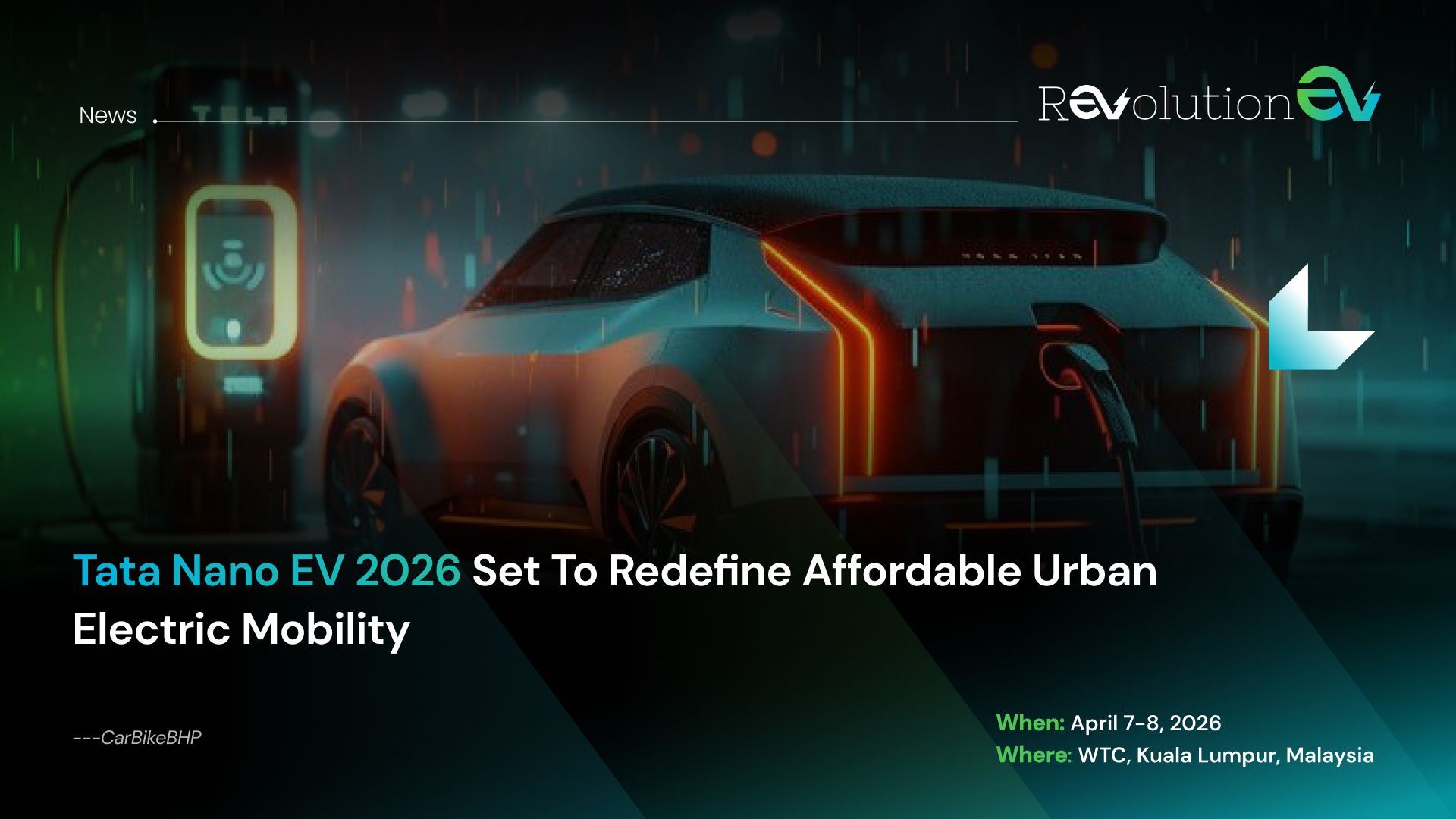
The Tata Nano, globally recognized for redefining affordable mobility, played a significant role in shaping India’s automotive aspirations by making four-wheel transportation accessible to a wider population. As India accelerates its transition toward electric mobility, Tata Motors is set to carry this legacy forward with the Tata Nano EV 2026 an affordable, compact electric vehicle designed to meet the demands of urban living while supporting the country’s sustainability goals.
Originally envisioned as a people’s car, the Nano symbolized inclusive mobility for Indian households. In today’s context, the evolution toward electric vehicles strengthens this vision even further. With lower operating costs, reduced maintenance requirements, and strong policy support, electric mobility has emerged as a practical and future-ready solution. The Nano EV represents a natural progression of Tata Motors’ commitment to accessible and environmentally responsible transportation.
India’s electric vehicle ecosystem is witnessing rapid growth, with increasing awareness, improving infrastructure, and rising demand for efficient city-focused mobility solutions. The Tata Nano EV 2026 is positioned to play a key role in this transition by offering a compact electric car that combines affordability, practicality, and modern design. Its urban-friendly dimensions and cost-efficient ownership model make it well suited for first-time buyers, daily commuters, young professionals, and families seeking a reliable city vehicle.
The Nano EV 2026 is expected to deliver a driving range of approximately 250 to 260 kilometers on a single charge, supported by a high-capacity 72V lithium battery. Home AC charging compatibility ensures convenience for everyday use, while the vehicle’s performance is optimized for smooth, quiet, and responsive city driving. This makes it an ideal choice for daily commuting, short trips, and routine urban travel.
Affordability remains at the heart of the Nano EV’s positioning, with an expected price range of ₹2.49 lakh to ₹2.99 lakh. Combined with low running costs, minimal maintenance, and eligibility for government incentives, the Nano EV offers an attractive total cost of ownership. This pricing strategy reinforces Tata Motors’ aim to make electric mobility accessible to a broader segment of the population.
In terms of design, the Nano EV 2026 is expected to feature a compact yet contemporary aesthetic that enhances maneuverability and ease of parking in dense city environments. A lightweight and energy-efficient build supports optimal range, while a thoughtfully designed interior ensures everyday comfort and usability. Despite its accessible pricing, the vehicle is likely to include essential modern features such as a digital instrument cluster, smartphone connectivity, regenerative braking, power windows, and connected diagnostics.
Safety and build quality are expected to reflect Tata Motors’ strong focus on robust engineering and passenger protection. The Nano EV is likely to feature a reinforced structure, improved braking systems, seat belt reminders, and essential electronic safety technologies, offering a secure and confidence-inspiring driving experience for urban users.
With Tata Motors’ established leadership in India’s EV market through models such as the Tiago EV and Nexon EV, the Nano EV 2026 benefits from proven expertise, a reliable after-sales network, and advanced battery technology. Together, these strengths position the Nano EV as a compelling symbol of clean, affordable, and inclusive urban transportation, with the potential to bring electric mobility to millions of Indian households and reshape the future of city travel.