
Contact Us
info@revolutionevasia.comJoin our Mailing list
 Chat With Us
By Isha Qureshi • Mon Dec 15 2025
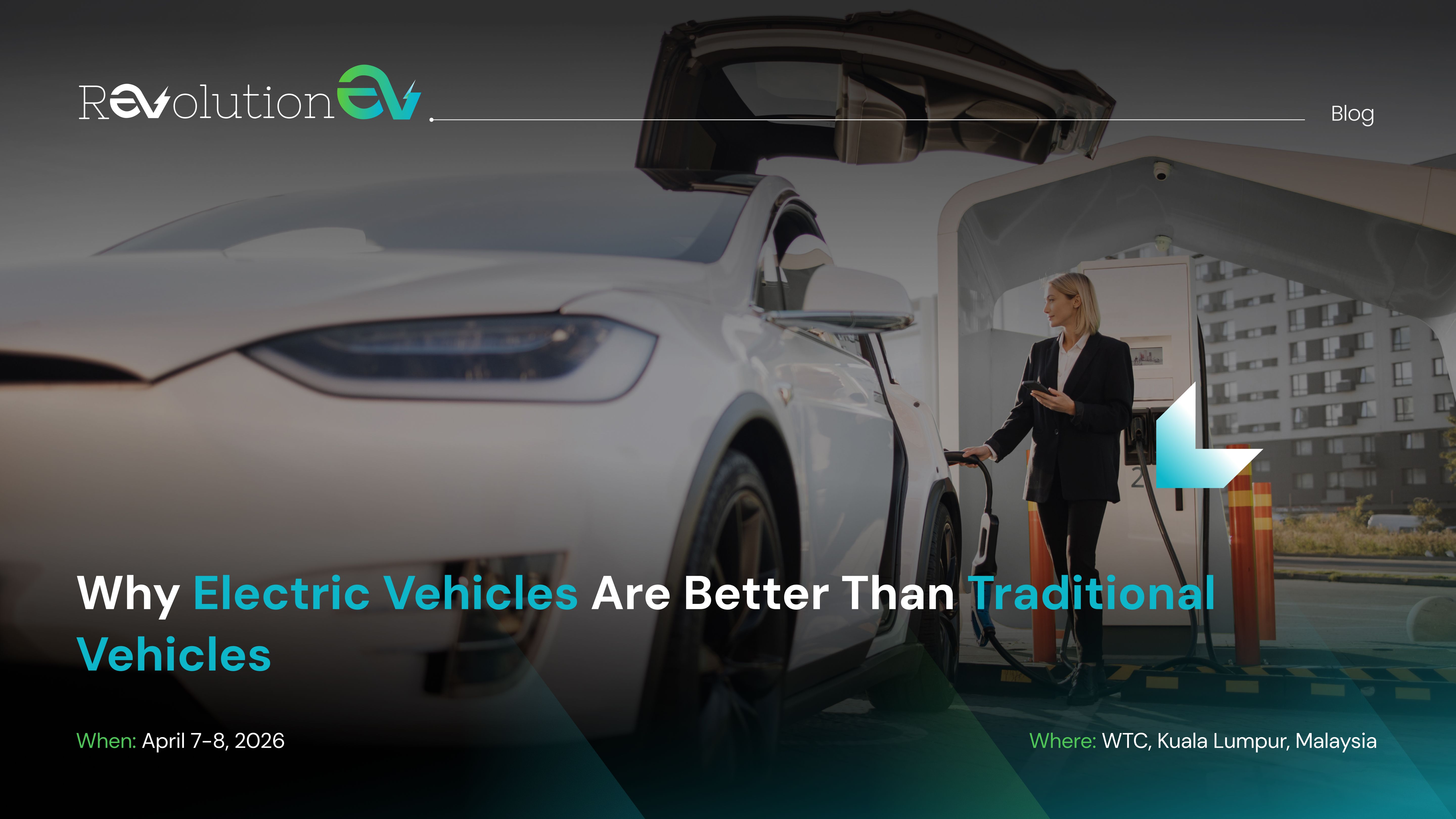
As the global automotive industry evolves, electric vehicles are rapidly emerging as a superior alternative to traditional internal combustion engine vehicles. Driven by advancements in technology, increased environmental awareness, and changing consumer expectations, EVs are becoming the preferred choice for both individuals and businesses. EVs stand out for their minimal environmental impact. Unlike ICE vehicles, EVs produce zero tailpipe emissions, thereby reducing urban air pollution and greenhouse gas output. This plays a crucial role in overcoming climate change and improving public health in densely populated regions. Even when accounting for the emissions from electricity generation, EVs maintain a minimum carbon footprint over their entire life cycle as compared to the traditional vehicles.
Charging an EV is generally more affordable than refueling a petrol or diesel car, especially when off-peak electricity rates are utilized or renewable energy is used for home charging. Maintenance is also simpler and less frequent. EVs have fewer moving mechanical parts than traditional vehicles; there's no engine oil, fewer filters, no exhaust systems, and simplified transmission. Common services such as oil changes, timing belt replacements, and spark plug maintenance are eliminated, resulting in substantial long-term savings and fewer workshop visits.
EVs are considerably more energy efficient than their petrol and diesel counterparts. While ICE vehicles typically convert only 20–30% of fuel energy into actual motion, EVs achieve conversion rates of over 80%. This means less energy is wasted, and more is used to directly power the vehicle.This efficiency translates not only to reduced energy consumption but also to lower running costs and improved sustainability across the vehicle’s lifecycle.
From a performance point of view EVs offer a refined and enjoyable driving experience. Features such as Instant torque and rapid acceleration, quieter operation with no engine noise ,Smooth handling due to a low center of gravity create a driving experience that is both responsive and comfortable. The absence of gear shifting and engine vibrations also contributes to a more seamless ride, particularly in urban and stop-and-go traffic environments.
Modern EVs are designed with innovation at their core. Many come equipped with advanced driver-assistance systems, integrated infotainment solutions, autonomous driving capabilities, and over-the-air software updates, allowing manufacturers to improve vehicle performance or introduce new features without physical intervention.EVs are also well-positioned for integration with smart infrastructure, such as connected charging networks, vehicle-to-grid (V2G) systems, and mobility-as-a-service (MaaS) platforms ushering in a new era of intelligent, connected transportation. In many parts of the world, policy frameworks are increasingly favoring EV adoption. Governments and regulatory bodies are offering incentives such as:Tax deductions or exemptions ,Purchase subsidies,Reduced registration fees,Access to dedicated parking or road lanes.These policy initiatives not only make EVs more accessible and affordable but also signal a clear direction toward an electrified transport future.EVs support broader sustainability goals, including reducing dependence on fossil fuels and promoting cleaner, more resilient energy systems.
As battery technology improves and recycling processes become more efficient, the overall environmental impact of EV production and disposal is expected to decline.Moreover, the transition to EVs is aligned with global climate targets and corporate ESG (Environmental, Social, and Governance) commitments, making them an increasingly important part of both personal and institutional transportation strategies.The automotive market is undergoing a fundamental transformation. Many major automakers have announced plans to phase out internal combustion engines in favor of electric models. Investing in an EV today means embracing future-ready mobility that aligns with long-term trends in sustainability, technology, and consumer demand.
As infrastructure expands and technology matures, EVs will not only become more practical but also more affordable and efficient, solidifying their place as the transportation standard of the future. Electric vehicles offer clear and measurable advantages over traditional petrol and diesel cars. From environmental sustainability and cost savings to technological innovation and energy efficiency, EVs are redefining what it means to drive in the 21st century. For individuals, businesses, and governments alike, the shift toward electric mobility is not merely a trend, it is a strategic move toward a cleaner, smarter, and more sustainable future.